Showing posts with label Green Energy. Show all posts
By Yap Jin Rui
Green Ink - An eco-friendly LoyarBurok column

Green Ink - An eco-friendly LoyarBurok column

A Malaysian youth reporting on the community based tree planting programme to rehabilitate the Raja Musa Peat Swamp Forest that had fallen victim to some 23,000 hectares of illegal clearing.

Greenk Ink: As you read this, illegal land clearing is once again reported in Raja Musa Peat Forest this week! More on this in our next article.

peat swamp forest tree planting volunteers

It has so often been ingrained in us, ours is a country that is loaded with its own resources. One such example is the peat swamp forests found in Malaysia, that in total make up the third largest surface area on the planet. These forests are invaluable assets that mitigate floods, act as critical wildlife habitats, and are among the planet’s most effective carbon stores.

Greedy and apathetic as we are, however, we have up till today allowed 90% of these peat swamps to be cleared, logged or burned in the name of development. The effects of this issue to the environment is alarming, to say the least, but it is the same old story, often told and often heard – so much so that it has to be asked: Is anybody still listening?

One of the dominant issues is the problematic peat fires. Firefighters are tasked with fires that burn violently and almost indefinitely, fueled by its high carbon content. The public’s health is affected by the haze that is spurred on by the flames.

And then there is this: peat swamps lock up carbon, a dirty word in the environmentalist’s book – there’s just too much of it in the atmosphere. When peat swamps go up in flames, the carbon released takes on the form of carbon dioxide, hence contributing further to our already warming climate.

The way in which peat fires occur is fairly straightforward. Peat, formed under very wet conditions, basically consists of semi-decayed vegetation accumulated over time. As long as it is soaked in water, the swamp ecosystem is kept in balance, and all is well. However, when a peat swamp is drained for, say, agricultural, industrial or residential development, the upper layer of the plant material dries up, conveniently forming a combustible and very flammable fuel, which, under excessively dry weather conditions, creates volatile fire hazards.

peat swamp forest tree planting rehab

The Raja Musa Peat Swamp Forest, located in the northern region of the Selangor state, is a part of the North Selangor Peat Swamp Forest. This 23,000 hectare wide peat swamp forest has been victim to illegal clearing and burning to make way for farming activities. Over the years, more than 500 hectares of the forest has been destroyed.

To put that into perspective, that is the equivalent of approximately 600 World Cup size soccer fields.

Thankfully, the Selangor state government has recognised the problem and is currently executing one of the largest forest rehabilitation projects in Malaysia on this location.

The focus is on clearing out illegal settlers and restoring the ruined forest, which creates the core reason why on the occasional Saturday morning, a union of sorts is formed between an unlikely blend of people – corporate workers, salesmen, students and many more. Some may be there to satisfy a curiosity and get the tree-planting experience, but most of them harbor a concern for the condition of the earth, and are acting on it.

One would perhaps find it heartening to know that there ARE still people listening after all.

This tree-planting effort in the Raja Musa Peat Swamp Reserve, planned to take place twice monthly from June till October 2010, is spearheaded by the Selangor State Forestry Department, the Global Environment Centre (GEC), the Sai Council and various other NGOs and community groups such as Eco-Warriors. Before planting, marcots of the Mahang tree species are harvested and then left to soak in the canals in the peat swamps. This is where we volunteers enter the scene.

nature peat swamp forest flower

We arrive as early as 8.oo in the morning and, after a short briefing, start the process of tree planting. The marcots, its newly grown roots still raw and fragile, are placed firmly into the soil, oftentimes while exchanging friendly banter with new friends. The success of restoring a peat swamp forest plays down not only to planting the trees, but also carrying out post planting maintenance such as canal blocking to control the water levels. This is executed in the weeks after the planting of the trees, to ensure that the plants do not die.

So we dig our fingers into the soil and put to work our green thumb. Carrying on until noon, the weather gets pretty harsh – and then we finish up and fill our tummies with the various goodies brought to the table by the organisers. The morning ends with the sun high up, and with our previously soil-stained fingers we sit in the shade and dig into good food with good company, whilst acknowledging that although this isn’t a conventional way to spend your Saturday morning, it is a pretty good one.

LB: The next tree planting dates are 15 August and 28 August 2010. For more info contact GEC.

Article Source
http://www.loyarburok.com/human-rights/green-world/peat-swamp-forest-rehab/

Hi guys,

I thought that this public lecture, which is free and open to all, might be of interest to those of you who are working on the COCs dealing with Food Security or who is just deeply concerned about the future of global food security in a climate changed world.

Details are as follows:

Date: 29 July 2010 (Thursday)
Time: 2.00pm
Venue: The University of Nottingham Malaysia Campus, Kuala Lumpur Teaching Centre, 2nd Floor, Chulan Tower, 3, Jalan Conlay, 50450 Kuala Lumpur

Speaker is Prof. Gregory Peter Gregory, who is the Chief Executive and Institute Director of the Scottish Crop Research Institute (SCRI). More information on the talk available in the attached poster for the event. If you are interested to attend, please confirm you attendance by sending an e-mail to Deepa: deepa.kumari@nottingham.edu.my. For more information regarding the event, you can also contact Ms. Deepa through e-mail or you can call 03-89248633

Regards,
Alex


KUALA KANGSAR: PLUS Express­ways Bhd is going green.

Its director Noorizah Abd Hamid said after the launch of the upgraded Sungai Perak R&R area by Deputy Works Minister Datuk Yong Khoon Seng yesterday, the highway concessionaire would be adopting environmental-friendly practices at its 24 rest and recreation (R&R) areas and 43 lay-bys throughout the country.

Themed “The Green Trail”, the R&R areas on the south-bound lane of the expressway was the first in the country to adopt a green approach.

Article Source


July 12, 2010 by Lin Edwards Parking lots could become 'solar groves' (w/ Video)

Enlarge

(PhysOrg.com) -- Architect Robert Noble, who specializes in sustainable design has come up with the idea of turning parking lots into "solar groves" that shade the vehicles, generate electricity, and serve as recharging stations for electric vehicles.

Large-scale solar groves have already been installed at the San Diego headquarters of the Kyocera Corporation of Japan, the headquarters of Johnson & Johnson subsidiary Centacor at Horsham, Pennsylvania, and the University of California in San Diego. The latter has two solar canopies, the Hopkins Parking Structure, which is built on the top floor of a parking garage, and the Gilman Parking Structure at one of the campus’s busiest entrances, where it is a constant reminder of the commitment of UCSD to sustainability.

The latest project of the company, in conjunction with Coulomb Technologies, a developer of charging stations for electric and hybrid vehicles, is the Solar Tree prototype at the National Renewable Energy laboratory (part of the Department of Energy) in Golden, Colorado. This pilot project covers two parking spaces and includes two AC outlets for charging plug-in hybrids or . A Solar Tree consists of a solar canopy with a single pole structure, and can be part of a multi-tree structure, or a single "tree" installation in a back yard, for example.

Parking lots could become 'solar groves' (w/ Video)
Enlarge

Hopkins Parking Structure, a recent addition to the UC San Diego campus.

A large installation including two solar-to-electric vehicle charging stations has been installed at the headquarters of Dell Computers in Round Rock, Texas. This installation includes 11 Solar Trees that generate about 131,000 kWh per year and shade 56 parking spaces.

Covering parking lots with solar groves could reduce the criticism often aimed at electric car manufacturers, that the vehicles need to use that often does not come from renewable sources, and it could also reduce criticisms about excessive land use for large-scale solar power plants. Mr Noble said that converting the “desert of concrete parking lots” into small power plants sidesteps both problems.

Parking lots could become 'solar groves' (w/ Video)
Enlarge

The Solar Tree at the National Renewable Energy Laboratory in Golden, Colorado, is the prototype of the future. Covering just two parking spaces, it is a pilot project that includes two integrated AC outlets for charging hybrid electric vehicles that NREL has converted into plug-in hybrid electric vehicles (PHEV).

Mr Noble said it would take some time, but he hopes that in perhaps 20 years or so there could be a “hyperconvergence” of transport, energy and infrastructure that could lead to widespread deployment of solar canopies for parking lots.

More information: http://envisionsolar.com/project-portfolio/parksolar/

© 2010 PhysOrg.com

Article Source


KOTA KINABALU: Sabah’s palm oil industry produces enough waste to generate up to 700MW of electricity, an American energy researcher said.

Dr Daniel M. Kammen said the figure was based on the 2008 palm oil production statistics and conservative growth estimates.

He said biomass power generation plants were economically feasible and logistically achievable via a four-project per year ramp-up programme.

The biomass power generation plants solved two environmental problems at once, Dr Kammen said at a forum on energy options for Sabah organised by Green Surf, a grouping of NGOs here.

“One problem is disposing of potentially hazardous mill wastes in open ponds and landfills and the other problem is meeting Sabah’s energy demands,” said Dr Kammen who carried out a study on the state’s clean energy options with fellow researchers Tyler McNish and Benjamin Gutierrez.

Noting that several mills in Sabah were already harnessing palm oil wastes to generate electricity, he said the 10MW limit on investment under the small renewable energy programme should be scrapped.

“There should be continued research and outreach efforts targeted at increasing the quantity of grid-connected electricity available from palm oil mills besides recognising renewable energy status as a premium product.

“It is also important to continue studying the feasibility of renewable investments at known geothermal, wind and environmentally sound micro-hydro sites,” noted the Unversity of California at Berkeley researcher.

Meanwhile, Abdul Nasir Abdul Wahid who represented Sabah Electricity Sdn Bhd (SESB) at the forum, insisted that the biomass approach to generate power was not viable to generate 300MW of electricity needed in the state’s east coast.

SESB and its parent company, Tenaga Nasional Bhd, have been pushing for a controversial 300MW coal fired plant in the east coast Lahad Datu.

The project has been opposed by various NGOs acting under the Green Surf umbrella.

Article Source
JOHOR BARU: The country should start using alternative energy or renewable energy resources to reduce dependency on fossil fuel, said Universiti Teknologi Malaysia (UTM) Faculty of Biomedical and Health Science Engineering dean Prof Dr Abdul Halim Mohamed Yatim.

“The only way to go forward with clean and green energy is to open up the market by giving consumers choices,” he said.

Prof Abdul Halim, who won an award for Best of The Best at the Malaysia Technology 2010 exhibition held in Kuala Lumpur last month, said the problem of supplying electricity to users in the rural areas could be solved by using his invention – an energy storage system.

Alternative energy resources such as solar, fuel cell, photovoltaic, wind turbine and micro turbine generators could be connected together in a module forming a hybrid energy source.

Users and agricultural-related activities in the rural areas can benefit from the system to reduce their dependency on fossil fuel, he added.

The system can reduce the country’s dependence and use of current energy resources like oil, gas and coal which are fast depleting and also reduce cardon dioxide emission.

Prof Abdul Halim said the Government could also reduce the cost of supplying electricity to the rural areas by using the system which could be upgraded to industrial scale.

He is willing to work with interested parties to promote its use.

Article Source


At TED2010, Bill Gates unveils his vision for the world's energy future, describing the need for "miracles" to avoid planetary catastrophe and explaining why he's backing a dramatically different type of nuclear reactor. The necessary goal? Zero carbon emissions globally by 2050.

TEDTalks is a daily video podcast of the best talks and performances from the TED Conference, where the world's leading thinkers and doers give the talk of their lives in 18 minutes. Featured speakers have included Al Gore on climate change, Philippe Starck on design, Jill Bolte Taylor on observing her own stroke, Nicholas Negroponte on One Laptop per Child, Jane Goodall on chimpanzees, Bill Gates on malaria and mosquitoes, Pattie Maes on the "Sixth Sense" wearable tech, and "Lost" producer JJ Abrams on the allure of mystery. TED stands for Technology, Entertainment, Design, and TEDTalks cover these topics as well as science, business, development and the arts. Closed captions and translated subtitles in a variety of languages are now available on TED.com, at http://www.ted.com/translate. Watch a highlight reel of the Top 10 TEDTalks at http://www.ted.com/index.php/talks/top10

Two of them offer reserved parking spaces for drivers of eco-friendly cars
By Irene Tham

(Ecologikal Notes: which mall in Malaysia will take the lead?)

GOING green has its privileges for drivers of eco-friendly wheels, such as hybrid cars, who get to use reserved parking spaces at some malls.

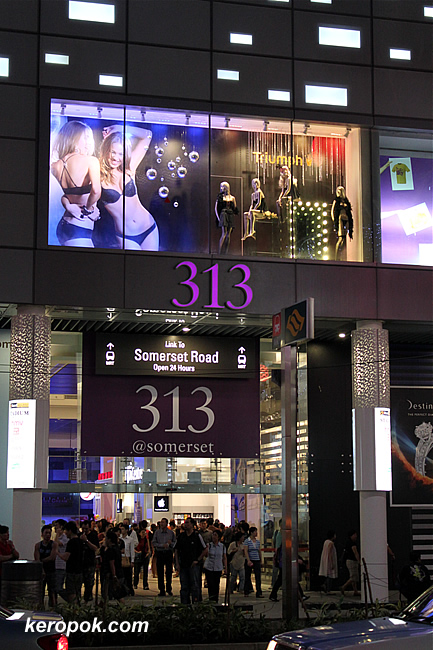
At least two malls here - 313@Somerset in Orchard Road and City Square Mall in Kitchener Road - have such reserved spots, even if these tend to be mostly empty. The two malls' spokesmen said they want to give drivers of eco-friendly cars a pat on the back.

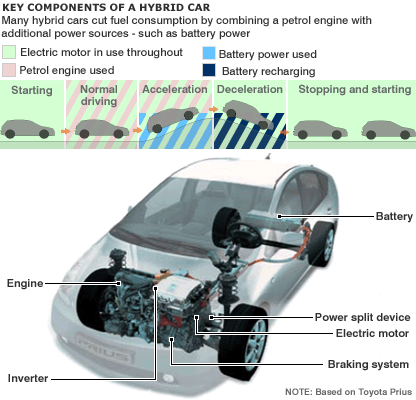
Hybrid cars are so called because they have a petrol engine as well as an electric one. They pollute less but cost more than petrol-driven cars.

There are only 2,600 hybrid cars (the Toyota Prius, Honda Civic Hybrid and Lexus RX400h models) here, compared to 571,600 petrol-driven cars.

All-electric cars are also privileged at the two malls but there is only one such vehicle here as of last year, the Land Transport Authority's website showed.

A spokesman for property developer City Developments Ltd (CDL), which manages City Square Mall, said: 'We encourage shoppers to choose eco- friendly vehicles to save the environment.'

Article Source

Sustainability initiatives in project offices at 313@somerset

The project teams at 313@somerset are committed to delivering a sustainable future for all our stakeholders and we recognise the importance of being accountable for what we take, what we create and what we leave behind.

Our project has already achieved the BCA Green Mark Platinum Award and our team continues to strive for excellence in our work environment. Initiatives include:

* Solar panels to harness the sun’s energy to power the Centre.
* CO and CO2 sensors at loading docks and car parks to control fan usages.
* Energy saving stand-by escalators to reduce energy consumption during lower peak period.
* Low-energy LED façade.
* High frequency ballasts for down-lights and T5 fluorescent lamps in lieu of T8.
* Extensive use of energy & water sub-metering for base building and tenants to closely monitor energy uses.
* Water efficient tap fittings to highest practical level and efficiency throughout to reduce water consumption and water wastage.
* Usage of NEWater (Public Utilities’ Recycled Water) for cooling towers and sprinkler make-up water.
* First privately developed building in Singapore to use Sprinkler Tank for Thermal Energy Storage Bank, thus allowing the building management to perform load shifting, load shaving and energy conservation.
* Co-generation plant produces heat from bio-diesel made from waste cooking oil to heat up hot water to supply the Centre’s requirement.
* Intelligent lighting control system, lighting controls and lighting sensors in atrium, top-level car-park to save energy during the day, motion sensors for staircases.
* Mechanical Grease Extraction System. Self-cleaning, in-built mechanical cutter and pump for grease extraction minimizes access to grease pit and improves indoor air quality.
* The long facades facing North-South incorporates high performance, “Low-E” double glazed system with insulated back panels to exposed areas to optimise HVAC loads as well as enhance occupant comfort.
* Gearless lift system coupled with AC VVVF drive uses less energy. Light-weight decorations and sleep mode are also featured.
* Energy Recovery Wheel is installed to capture the cooling energy from the exhaust air that is from the air-conditioned space which is then transferred to pre-cool the fresh air going into the air-conditioning system.
* Collection of rainwater for toilet flushing, vertical greening in sky terrace and landscaping in discovery walk.
* Use of recycled materials, low VOC paint & low emissive materials to the project including reuse of carpet tiles and workstations from leasing office to centre management office.
* Green Lease and Tenancy Collaboration.

Article Source
GOING green is not just for tree huggers. Entrepreneurs, industrialists, inventors and consumers need to understand that adopting green practices is just plain smart and profitable in the long run.

A peek into most middle class landed homes in suburbs around Kuala Lumpur would reveal at least two or even three automobiles in the driveway. Closer inspection will reveal the blades of air-conditioner compressors whirring and lights turned on even during the day. One wonders whether these homeowners have even heard of the term “carbon emissions.”power

Carbon emissions are a measure of the amount of carbon as well as green house gases that are released into the atmosphere from our all daily activities. Carbon and green house gases "eats up" the ozone layer, a protective coating around the Earth which protects us from harmful radiation from the sun and keeps global temperatures and weather patterns in equilibrium.

A large portion of carbon and green house gases come from the burning of oil for all sorts of purposes from power generation to driving our vehicles.

Malaysia had consistently ranked poorly in the global ranking of carbon emitters (number 157 out of 224 countries) and according to several reports and studies done by the US-based International Energy Agency, Malaysia’s carbon emissions per capita had increased from 3.1 tons per capita to 7.2 tons per capita over a 16-year period from 1990-2006.

By 2010, this figure is expected to touch 8 tons per capita putting Malaysia third, behind Vietnam and China in terms of the growth rate of carbon emissions.

Realising that 28 million Malaysians were burning more and more fuel, Prime Minister Najib Abdul Razak last July launched the Green Technology Policy under the newly renamed ministry, the Ministry of Energy, Green Technology and Water which replaced the former Ministry of Energy, Water and Communications.

At the launch, Najib said the time had come for Malaysia to go green, citing global concerns to adopt and embrace sustainable and renewable best practices.

What was more important in his message was his plan to facilitate the growth of the green technology industry that was named as one of the key drivers that would contribute to the national economy.

In other words, he was saying that going green was not just for tree huggers, it was for entrepreneurs, industrialists, inventors and consumers at large.

A two-pronged strategy would achieve the objective of reducing total carbon emissions by 15% and reducing total emissions per GDP by 40% by 2020 compared to 2005 levels and catalysing Malaysia’s capability and capacity for innovation in green technology development.

This is not going to be easy considering that Malaysia wants to be an industrialised nation by 2020. The problem is made more difficult by the fact the government is still subsidising the use of fossil fuels.

Most industries have become so comfortable with low energy costs that there is less incentive for them to become energy-efficient or look to alternative energy sources.

While the technology for energy efficiency and alternative energy sources is available, the costs of implementing the technology is expensive compared to cheap, subsidised power produced by the IPPs.

For a business whose main aim is profit by producing the maximum at minimum cost, becoming energy efficient is, ironically, less profitable. Only if switching costs become cheaper will businesses switch. The answer to that is the gradual removal of subsidies to bring up the price of energy to market prices.

At market prices, businesses will start thinking about energy efficiency and alternative energy.

Increasing power generation and power use from biomass and biogas and solid waste and tapping the sun’s energy is a noble goal.

But in order for green innovation to work, educating the public and creating awareness about energy efficiency and energy alternatives is simply not good enough. Funding to companies that supply and utilize green technology is also not good enough.

Environmental consciousness needs a swift kick where it hurts most. Not the minds and hearts of the people but their wallets.

For example, if it costs less to buy and use Malaysian-made solar panels that can trap unlimited solar energy 365 days in the year compared to fossil fuel-produced electricity that is derived from depleting gas reserves, Malaysians WILL go green.

Ultimately these solar panels will become cheaper to produce and will be able to be exported around the world providing jobs for Malaysians and contributing to the Malaysian economy and developing Malaysian technology.

The gradual removal of subsidies not only for gas to produce electricity but for petrol, diesel, and liquefied petroleum gas will benefit Malaysia in the long run, not only environmentally but economically as well.

The Green Technology policy is giving us a way to build not only a greener and more sustainable future but a more economical and profitable one at that.

For the Environment
Kuala Lumpur

Article Source
Palm oil millers can help generate electricity for supply to the national grid and reduce power producers' dependence on natural gas, which can then be channelled to other sectors.

Malaysian Industrial Development Authority director-general Datuk Jalilah Baba said two days ago that, from 2012, the government would be looking to importing gas to meet impending shortage in the country.

Heavy users of natural gas include oleochemical producers and steel millers, who use the commodity as feedstock and fuel.

According to the Malaysian Palm Oil Board (MPOB), there are 417 palm oil mills in the country, out of which 246 are in Peninsular Malaysia. Mills emit methane from retention ponds after oil extraction.

Methane is one of the many polluting gases in the environment contributing to the depletion of the ozone layer and global warming.
Palm oil millers can trap the methane to generate electricity and then sell it to Tenaga Nasional Bhd to be distributed in the national power grid.

"We've appointed an international consultant to carry out a feasibility study on palm oil millers trapping greenhouse gas from palm oil mill effluent (POME) and converting it into energy," MPOB chairman Datuk Sabri Ahmad said.

"The consultant is expected to finalise the study in two months," he told Business Times in a telephone interview.

In a separate interview, Bell Corp Sdn Bhd, which owns seven palm oil mills in the country, lent support to the government's policy of reducing the reliance on depleting fossil fuels and using more renewable energy instead.

"It is possible for mill owners like us to trap methane from POME and pump it into gas engines to generate electricity and hook up to the national grid," Bell chief executive Datin Liana Low said.

To date, one of Bell's mills has been fitted with a biogas plant to extract methane from POME to generate 2 megawatts (MW) of electricity for sale to Tenaga Nasional Bhd.

"By buying more green electricity from palm oil millers like us, the government can re-channel more natural gas for the export-driven manufacturing sector," she said.

Prime Minister Datuk Seri Najib Razak said in his speech at the World Future Energy Summit in Abu Dhabi recently that Malaysia was looking at improving feed-in tariffs as part of efforts to promote production of renewable energy.

Feed-in tariffs guarantee that energy generated through renewable resources is purchased by the national grid operator.

Article Source

Editor: Lin Zhi

(ecologikal notes: this article for some reasons was not seen published in any of Malaysian media)

KUALA LUMPUR, Aug. 5 (Xinhua) -- The Malaysian government should promote the use of green energy in order to contribute positively to sustain the environment, industry players said here on Wednesday.

Saw Choo Boon, Chairman of Shell Malaysia, a petrol company, said that the Malaysian government should do away fuel subsidies as fuel should not be a cheap commodity.

With the subsidies in place, fuel prices would be kept low, and there was no incentives for the people to conserve fuel consumption, Saw said at a roundtable talk which were attended by eight prominent business figures here.

He said that when the government increased the petrol price in 2008, consumption dropped by 10 percent.

Malaysia's prime gasoline price once rose to 2.70 ringgit (0.77U.S. dollars) a liter from two ringgit (0.57 U.S. dollars) in June2008.

Should the government cut down its fuel subsidies, billions of ringgit could be saved for promoting the use of green energy, which in turn benefits the future generations, added Saw.

Going green was not a matter of possibility but something the nation must do, stressed Saw, adding that fossil fuel would go into history after a few decades.

Touching on education, Saw said the Malaysian government should come up with relevant courses to meet the development requirement of the green energy.

He said that providing technology-savvy experts to the industry as well as venturing into starting-up business that acquired high technologies were important.

Johan Dennelind, Chief Executive Officer of DiGi Telecommunications Sdn Bhd, echoed Sam's view, citing a Swedish experience.

Dennelind said that in the 90's, the Swedish government decided to allow energy prices to move towards market prices, reducing the coal and oil generated energy from 80 percent in the 70's to 20 percent currently.

This showed that giving incentives alone was not enough in promoting green energy but other regulations should come in place as a complement, said Dennelind.

Ahmad Hadri Haris, National Project Leader of Malaysia Energy Center, said the exorbitant prices of green energy should not be ahindrance for the people to use it.

Fuel prices looked low but should the external costs such as damages to the environment be incorporated, the real prices of fuel would surge, reminded Ahmad.

He also said that the development of green energy was likely to be incorporated into the Tenth Malaysia Plan, making the industry an important jobs creator.

The Malaysia Plan is a five year plan to develop the nation's infrastructure, education, health care and etc for the well-being of the people as well as for the economy. Currently the Ninth Malaysia Plan is ongoing.

Pian Sukro, Chairman of Energy Commission Malaysia, said that the Malaysian government should consider hydro power as the nation had plenty of the resources.

He said nuclear power should be considered as well and the developed countries should use more of this source to generate energy, leaving the conventional methods for the developing countries.

Tay Kay Luan, Director of Association of Chartered Certified Accountants for ASEAN and Australia, said that utilizing green energy was good for both business and reputation.

When introducing hybrid vehicles, the Malaysian government should capture renewable energies such as hydro, wind and solar power, added Tay.

Lee Chor Wah, President of Malaysian Institute of Architects, said the Malaysian government could give cash incentives for the constructions of green buildings.

However, he admitted that there was limited incentive for consumers to build green buildings as the relatively low technology adopted in Malaysia made going green costly.

Costs of construction could increase by 10 to 15 percent in Malaysia for going green but it only cost 2 to 3 percent more in Australia, added Lee.

Lee Weng Seong, Chairman and Chief Executive Officer of PhilipsGroup of Companies in Malaysia, said the people should think that their business might not be sustainable without going green, instead of thinking only about the costs incurred to go green.

He urged the Malaysian government to draw up strict standards for various industries to adhere to and penalize those who failed to comply with the regulations and requirements.

Julian Wynter, Chief Executive Officer of Standard Chartered Bank Malaysia, said education, incentives and regulations must be coordinated in a way to make green energy popular.

On the individuals side, Wynter advised everyone to consume less resources.

He said the bank had embarked on internet banking and phone banking, resulting in less papers being consumed.

Article Source


Although green building initiatives in Malaysia are still at infancy stage, yet the awareness of its financial and tangible benefits is increasing. The need for lower operational cost is the main reason for companies to adopt green concepts.

The government is also committed in promoting green concepts with the establishment of Energy, Green Technology and Water Ministry, under the leadership of Datuk Peter Chin. In addition, according to Works Minister, Datuk Shaziman Abu Mansor, future government buildings will be incorporating green concepts. The launch of Malaysia’s very own green rating tool, Green Building Index, has brought sustainability development in Malaysia to a higher level.

High Performance Green Buildings, Malaysia aims to address the current trends, future direction, and the best practices of constructing sustainable buildings. This event also offers an opportunity to promote Malaysia as one of the investment destination for sustainable building.

Attend this informative event and gain practical insights into:

  • Discovering the methodologies and strategies to build a GBI certified building
  • Identifying techniques of constructing a cost-effective green building
  • Gaining insights on successful international and local case studies of green buildings
  • Leveraging strategies maintaining sustainable buildings
  • Increasing the efficiency of renewable energy
  • Exploring the vast array of green technologies

The High-Performance Green Buildings, Malaysia is structured to be a one-day conference and one-day training. The event will feature ground breaking presentations and case studies:

  • Mastermind of green building: Is it the government, developer, designer, or supplier?
  • Green Design and Planning : The five strategies
  • Shading for sustainable cities – A new range of opportunities
  • Strategic exploration of greening existing building
  • Plus a special masterclass on constructing green building for certification

Speakers who have confirmed speaking at the event are:

  • Derek Swift Group Sustainability Manager Al-Faara Group, Dubai
  • Martin C Hay RIBA Manager – Architecture GHD, Doha
  • Dato’ Dr Ken Yeang Principal TR Hamzah & Yeang Sdn Bhd (Malaysia) and Llewelyn Davies Yeang (UK)
  • Silas Chiow Director Skidmore, Owings & Merrill, China
  • Gieto Sugianto Director- Projects Architects 61, Singapore
  • CK Tang Director IEN Consultants

Contact Ms. Alexis Nair at +603 2035 5682. Alternatively, you can also e-mail at alexis@myevents-intl.com or visit http://www.greenevents.com.my/.

Article Source

Official Event Website

MALAYSIA is keen to become the regional centre for green energy, especially solar energy, a move which has attracted small and medium enterprises (SMEs), says International Trade and Industry Minister Datuk Mustapa Mohamed.
So far more than RM9.5 billion investments have been approved, including by major global names in the solar industry such as First Solar from the US and Q-Cells from Germany.
"These large manufacturers would need a lot of vendors to supply the inputs and components," Mustapa said.
"Given the extent of SME involvement in the economies of most countries, it makes sense to engage them in the process of increasing energy efficiency in production and delivery, and of services," he added.
The Malaysian German Chamber of Commerce and Industry executive director Alexander Stedtfeld said the expansion plans of companies like Q-Cells into the second and third phase would need SMEs to help develop the technology.
He said growth potential of the renewable energy sector is large, as in the case of Germany where the number of people working totalled 1.3 million compared with 700,000 in automotive sector.
EU ambassador Vincent Piket said the EU climate and energy package has legally binding 20:20:20 targets for 2020, with 20 per cent greenhouse gas savings, 20 per cent share for renewable energy and 20 per cent increase in energy efficiency.
"Investment in green growth will not just take our economy out of the slump, it will take it to a new level of sustainable growth in economic, social and environment terms," Piket said.

Stories by BAVANI M
Photos by ART CHEN

TO become a world-class city, Kuala Lumpur must also be sustainable. To do that, the city must learn how to reduce its carbon footprint by using natural resources more efficiently, re-use resources and reduce waste. One way of doing this is by designing buildings with minimal negative impact on the environment. StarMetro reports.

IF Kuala Lumpur mayor Datuk Ahmad Fuad Ismail had super- powers, he would transform Kuala Lumpur into a green city with zero carbon footprint. But alas, the mayor is no superman, but he still harbours this vision of seeing KL being developed into a sustainable city whose residents would enjoy living in a zero carbon and waste-free environment.

A bone fide greenie, Fuad has shown that he is one leader who is willing to embrace the green movement by ensuring that developments in the city are environment- friendly.

Therefore when Malaysia introduced its very own Green Building Index (GBI) on May 21, no one was more delighted than Fuad.

Cooling: Shady trees amid the city’s streets and buildings provide much-needed relief from the heat.

For the uninitiated, the GBI is a certification tool that will provide guidelines for sustainable development and environment-friendly construction.

Knowing full well that with this tool, new buildings in Kuala Lumpur can be guided and managed to lessen their impact on the environment the mayor is enthusiastic about getting started.

But there is a hitch. The GBI is developed by Pertubuhan Akitek Malaysia (PAM) and the Association of Consulting Engineers Malaysia (ACEM) – two private bodies with no affiliation with the government.

Despite the government’s support, there is not much that Fuad can do to encourage and promote sustainability in the built environment since it concerns policy decision and requires the blessings of, among others, the Federal Territories Ministry, Housing and Local Government Ministry, Public Works Ministry and the new Energy, Green Technology and Water Ministry.

But the mayor is not about to let that stop him. He already speaks of offering incentives to be given out to developers and building owners in the city to design and construct green, sustainable buildings that can conserve energy and water, provide a healthier indoor environment, better connectivity to public transport and the adoption of recycling and green programmes for their projects.

Bringing the heat down: Building owners can reduce the heat-island effect by planting more trees and greens around their offices and rooftops.

At a recent interview, Fuad told StarMetro that incentives such as increased plot ratio and reduction in assessment are just some of the perks that could be offered to developers and building owners who are willing to embrace the green mission.

But it is something that needed thought and planning before it could be implemented. Fuad, however, said any project, however, minor that incorporateed the green agenda such as planting more trees, recycling, and composting would indeed be rewarded.

PAM president Lee Chor Wah welcomed Fuad’s suggestion saying that it would be a good incentive for current building owners and developers to embrace the green mission now in order for them to reap its long-term benefits.

“By having our own rating system, we can start with simple tasks such as changing light bulbs to energy- efficient ones, or doing away with paint, or installing solar heaters for buildings and offices,’’ said Lee.

The idea, Lee said, was to provide opportunities for developers, and building owners to design and construct green, sustainable buildings that could provide a healthier indoor environment that would save on energy and water.

Future look: The Kuala Lumpur City Hall building in Jalan Raja Laut (right) looks bare as compared with an artist’s impression of the building by Persatuan Arkitek Malaysia on how it can incorporate green elements by planting plants on the rooftop, windows and balconies.

Apart from the long-term benefits, green buildings send the right message about a company or organisation.

According to Lee, foreign and multi-national companies are looking at buying or leasing properties in Asia that are green. Even international brands look for shopping malls that are green before taking up lots in the mall.

“It shows that the particular organisation is committed and responsible about the future,’’ Lee said, adding that it was part of their social responsibility to preserve the environment.

article source

By ZULKIFLI ABD RAHMAN

BANGI: The National Green Technology Policy is set to play an important role in charting the country’s development where green technology will be the new driver for economic growth.

Prime Minister Datuk Seri Najib Tun Razak said the policy would include the setting up of a legislative and regulatory framework that would support development of green technologies and promote a culture of resource use optimisation.

The policy seeks to promote low-carbon technology and ensure sustainable development while conserving the natural environment and resources.

He said green technology offered opportunities and potential in economic regeneration, innovation, wealth creation and high-paying job opportunities.

“It can create a revolutionary impact on our lives and reduce Malaysia’s carbon footprint while enhancing environmental sustainability,” he said during the roll-out of the policy yesterday.

Najib also opened the green energy office of the Malaysia Energy Centre head office here.

He added that the policy would create opportunities for new green businesses, including the manufacturing of “green products”.

The five objectives include decreasing energy consumption while enhancing economic development and facilitatating growth of the green technology industry and enhancing its contribution to the national economy.

It also seeks to increase innovation in green technology development and enhance Malaysia’s green technology competitiveness globally besides ensuring sustainable development for future generations.

The policy will also enhance public education and awareness about green technology and encourage its use in everyone’s daily lives.

A Green Technology Council will also be established to facilitate the role of stakeholders for the successful implementation of the green technology roadmap.

It will be chaired by Najib and, alternately, by Deputy Prime Minister Tan Sri Muhyiddin Yassin.

At a press conference later, Najib said the Government was studying incentives for the private sector that adopts green technology.

On promoting solar energy usage, Najib said the equipment needed to do so was expensive, but that the Government would continue its development.

On plans to set up a nuclear power plant in Malaysia, Najib said nuclear energy was not considered to be against green technology as long as it was deemed safe.

article source

By LESTER KONG

The newly established Energy, Green Technology and Water Ministry is making a stand to promote green technology to reduce the country’s carbon footprint and damage to the environment.

Malaysia has to go green soon or risk completely using up valuable resources in the country and reducing its natural heritage to nothing.

To reduce the country’s carbon footprint and damage to the local environment, the newly established Energy, Green Technology and Water Ministry is now making a stand to promote green technology.

Dr Halim: We risk using up valuable resources and reducing our natural heritage to nothing.

Ministry Secretary-General Datuk Dr Halim Man said that green technology meant using resources such as energy and water minimally if not efficiently to develop and produce goods and services.

“Any technology to produce or develop products and services which contributes to emissions such as carbon monoxide and other greenhouse gases must be reduced through awareness in this initial stage and further through enforcement,” he said in an interview at his Putrajaya office.

Even the ministry’s building in the nation’s administrative capital had incorporated ‘green’ aspects such as recessed glass panels on its windows to reduce the amount of heat seeping through, thus reducing the amount of energy that is needed to power air-conditioners to cool the building.

The Government’s effort to develop green technology could be seen from two aspects, according to Dr Halim.

“First is innovation, namely to create or develop green technology that are environmentally friendly and practical.

“It is vital to encourage students to invent green technology that are simple. In the tertiary levels, researchers could also be encouraged to produce products that did not waste energy and water. These innovations could then be commercialised for local consumption and export,” he said.

Secondly, he said, the Government also wanted to promote the use or application of green technology in both work processes and daily practices.

“For example, we can carry drinking water in our own containers instead of buying mineral water bottles. If we buy food to bring home, we can use our own food containers without relying on styroform or unenvironmentally-friendly plastic,” he said.

On energy efficient appliances, Dr Halim said the ministry was working on an Energy Efficiency Master Plan to introduce such as labeling of energy efficient equipment, minimum energy, energy performence standard, to ensure that energy is use more efficiently in the country.

“This is like what Japan, Thailand and Germany have. We have to model after these countries,” he said.

He gave the example of China having enacted regulations that require motorcycles in Beijing to use batteries instead of highly-polluting two-stroke engines in motorcycles.

Dr Halim said the ministry was now in the process of developing a National Green Technology Policy that it planned to roll out on July 24.

“We anticipate the need for legal and regulatory framework for green practices and technology. In terms of research and development, we must encourage this.

“We must also have more people trained in green technology through the local universities,” he said, adding that the ministry is already collaborating with the Higher Education Ministry to come up with the syllabus on green technology.

“Now it is time to hinge on green technology. We are also looking into how we can collaborate with overseas universities on green technology,” he said.

Dr Halim pointed out that it was all about creating awareness and educating the public about why Malaysian homes and businesses had to switch to using renewable energy and energy-efficient sources.

“We need to spend a lot of time and money on public education to create awareness on green technology. The reason is to have sustainable development,” he said.

One of the key ways to encourage homes and businesses is to switch to using green technology was through the Green Building Index (GBI), developed by the Malaysian Institute of Architects (PAM) and Association of Consulting Engineers Malaysia (ACEM).

Buildings that incorporate PAM’s six key criteria – energy efficiency, indoor environmental quality, sustainable site planning and management, materials and resources used, water usage efficiency and innovation – will be given a GBI rating.

“Any buildings with these criteria will have very low carbon footprint, for instance, energy used to cool the building will be low. These are all elements of design, so that buildings would not need cooling system that consume a lot of energy. Buildings that are compliant to the ratings will be considered green buildings,” he said.

He added that the capital outlay for green buildings will be higher.

“But in the long run, you save a lot in water and electrical costs. It would cost about 10% higher to develop and build but in terms of savings, you gain it back in a short time. If you had solar cells, you could even gain more power than is consumed,” he said.

Dr Halim said most people did not realise the extent of environmental costs generated through home and industrial waste.

“This is the cost you have to pay to mitigate environmental damage. Like plastic clogging the rivers and other water bodies. What is the environmental cost for you to mitigate these situations? If we drive a car, we are polluting the environment and it takes a lot to clean it up. Rubbish by the road and in rivers are visible and we can spend money to clean it up. But what about climate change? You cannot pay money to clean up greenhouse gases. In the end, society loses,” he said.

Dr Halim explained that economic growth was coupled with energy consumption and usage.

“The higher, the growth, the higher the energy use. Some countries are trying to ‘decouple’ this trend. That means you still have economic growth but your energy consumption is limited.

“In Malaysia the growth of energy consumption was parallel to economic growth”.

“The growth was not exponential but very sharp. We had grown very fast during (former Prime Minister) Tun Dr Mahathir Mohamad’s time,” he said, adding that the highest energy consumption per capita in the region was Singapore.

He said Malaysians had to understand that sustainable development and care for the environment is the goal that must be made centre stage now.

“We can develop without damaging the environment. At the end of the day, it’s not just about economic growth but also sustainable development.

“Future generations must not have less than what we have now. We need to slow down the process of destruction on the environment. If we don’t practice green technology now, it will be too late,” he said.

article source

For many years bamboo has enjoyed the reputation of sustainable
flooring front runner, but cork is now giving bamboo a run for its
money.

How do they shape up in comparison?

Appearance
Bamboo is slightly limited in terms of color choice compared to cork. Using pigments, cork can be dyed almost any color, though many prefer the look of more natural tones. Although bamboo can be cut in a way to create more than one pattern or grain, cork naturally has six different patterns. Cork can also be cut easily to create interesting borders or mosaics, adding to its design appeal.

Insulation
Cork, due to its thermal properties, is cool in winter and warm in summer. Bamboo is more like hardwoods in that it is temperature neutral. Cork offers great sound absorption compared to bamboo, which has the same sound quality as hardwoods.

Maintenance
Both are relatively easy to maintain—sweep and then dust with a very light, damp mop.

Refinish and Replace
Cork floors may be somewhat difficult to match—if you are replacing a damaged area, you may need to re-surface the whole floor. Bamboo floors can be sanded and refinished.

Durability
Bamboo flooring is more scratch resistant than cork, though owners have reported it can dent, especially under pointed pressure. Cork can also dent if heavy items are placed on it. However, the flexibility of cork yields rates of 95% recovery after 50% compression. Consensus claims that both cork and bamboo are more durable than hardwood floors.

Environmental
Cork is a 100% renewable resource, harvested from the bark of living cork oak trees. Bamboo is a sustainable, harvested grass that regenerates at least 8x faster than hardwood. Both boast a LEED MR (Materials and Resources) Credit of 6, the rating tier devoted to Rapidly Renewable Materials. Both also receive a LEED IEQ (Indoor Environmental Quality) credit of 4, the rating tier devoted to Low-Emitting Materials.

Your Needs
So whatʼs best for you? Take into account your living environment—if you have pets, bamboo might be the better option because of its durability. If you have children, cork makes for a safer surface, as it is better at cushioning. Cork is also a great choice for entertaining or spending long periods of time in the kitchen, as it is sound absorbent and acclimates to suit seasonal temperatures.

In sum, both are beautiful, sustainable, low-maintenance flooring materials, so there aren't any losers here in the competition for "most eco-friendly and stylish flooring."

For tips on caring for cork and bamboo floors, see these tips:

-Article sourced from here-