Nuclear power image

Image Source: Wikimedia Commons

Dear Pablo: Too often I hear politicians, lobbyists, and others advocating for nuclear power, but doesn't the processing of the fuel take a huge amount of energy? So how can they call it carbon neutral?

The short answer is that nuclear energy is not "carbon neutral." Wind and solar can also not be said to be entirely without greenhouse gas emissions. But with truly renewable energy sources such as solar and wind we are talking about a one-time "investment" of greenhouse gas emissions when the solar panels or windmills are built. The energy payback period for solar panels is less than two years according to some sources, and even less for wind.

Nuclear energy cannot be considered truly renewable because it relies on a fuel. One that is not only highly processed and refined, but also one that is not replenished by incoming solar energy or biological processes, like wind, solar, tidal, and biomass are.

Where Do Greenhouse Gas Emissions Come From In the Nuclear Power Lifecycle?

Construction


Greenhouse gas emissions in the nuclear power lifecycle begin with the construction of the nuclear power plant. Containment domes and redundant systems make the environmental impact of building a nuclear power plant much bigger than a conventional power plant. But because nuclear power plants have a significantly higher electricity output, the impact per kWh is lessened, but still significant at 2.22 tons of greenhouse gas emissions per gigawatt-hour (GWh), compared to 0.95 tons per GWh for combined-cycle natural gas.

Milling, Mining, and Enrichment


Nuclear fuel, Uranium 235 or Plutonium 239, begin as ore in a giant pit mine (75%) or an underground mine (25%). The ore has a uranium concentration around 1.5%, which needs to be further refined. Processing that includes crushing, leaching, and acid baths produces a more concentrated U3O8 called yellowcake. The U3O8 is processed into UO3, and then into UO2, which is manufactured into fuel rods for nuclear power plants. From mine to power plant, the greenhouse gas emissions can add up to another 0.683 tons of greenhouse gas emissions for every GWh.

Heavy Water Production


An important component of many types of nuclear power plants is heavy water, which is a water with a higher than normal concentration of Deuterium Monoxide D2O, which is just like water in which the Hydrogen atom has been replaced by a Deuterium atom. I was surprised to learn that the production of this heavy water is actually on of the biggest contributors to the greenhouse gas emissions in the nuclear energy lifecycle. In fact it can result in up to 9.64 tons of greenhouse gas emissions per GWh.

So, What is the "Carbon Footprint" of nuclear power?


According to my sources the entire lifecycle emissions of nuclear power are as high as 15.42 tons per GWh. But how does that compare to other electricity sources? A typical nuclear power plant is around 1 GW. Assuming 100% uptime (nuclear power plants do go offline for maintenence), a 1 GW power plant, running 8760 hours per year, will produce 8760 gigawatt-hours, or 8.76 billion kilowatt-hours per year. The average US household uses 11,232 kWh per year, so the average nuclear power plant services 780,000 households. Now, 15.42 tons per GWh translates into 15.42 kg per megawatt-hour (MWh). For comparison, California's mixture of electricity sources, including nuclear, creates 328.4 kg of CO2 per MWh and Kansas tops out the nation at 889.5 kg per MWh. The lifecycle emissions of wind power are around 10 kg per MWh.

Sure, nuclear power has lower greenhouse gas emissions than any combustion-based fuel source but it still has many other problems. We all know about the dangers of nuclear accidents and the issues around nuclear waste. If politicians were technology agnostic, removed subsidies for the coal and nuclear industry, and set a price on carbon with a national cap and trade system, there would be no debate. The free market would choose the path to the most cost effective and cleanest sources of energy which would include wind, solar, small-scale hydro, geothermal, energy efficiency, tidal, and certainly not nuclear or "clean coal."

Additional Resources on Nuclear Power:
The Next Nuclear Renaissance is Already Underway
Green Nuclear Waste?
Life Cycle Analysis of Nuclear Power

Article Source

SEPT 28 — Every once in a while I feel despair over the fate of the planet. If you’ve been following climate science, you know what I mean: the sense that we’re hurtling towards catastrophe but nobody wants to hear about it or do anything to avert it.

And here’s the thing: I’m not engaging in hyperbole. These days, dire warnings aren’t the delusional raving of cranks. They’re what come out of the most widely respected climate models, devised by the leading researchers. The prognosis for the planet has gotten much, much worse in just the last few years.

What’s driving this new pessimism? Partly it’s the fact that some predicted changes, like a decline in Arctic Sea ice, are happening much faster than expected. Partly it’s growing evidence that feedback loops amplifying the effects of man-made greenhouse gas emissions are stronger than previously realized. For example, it has long been understood that global warming will cause the tundra to thaw, releasing carbon dioxide, which will cause even more warming, but new research shows far more carbon dioxide locked in the permafrost than previously thought, which means a much bigger feedback effect.

The result of all this is that climate scientists have, en masse, become Cassandras — gifted with the ability to prophesy future disasters, but cursed with the inability to get anyone to believe them.

And we’re not just talking about disasters in the distant future, either. The really big rise in global temperature probably won’t take place until the second half of this century, but there will be plenty of damage long before then.

For example, one 2007 paper in the journal Science is titled “Model Projections of an Imminent Transition to a More Arid Climate in Southwestern North America” — yes, “imminent” — and reports “a broad consensus among climate models” that a permanent drought, bringing Dust Bowl-type conditions, “will become the new climatology of the American Southwest within a time frame of years to decades.”

So if you live in, say, Los Angeles, and liked those pictures of red skies and choking dust in Sydney, Australia, last week, no need to travel. They’ll be coming your way in the not-too-distant future.

Now, at this point I have to make the obligatory disclaimer that no individual weather event can be attributed to global warming. The point, however, is that climate change will make events like that Australian dust storm much more common.

In a rational world, then, the looming climate disaster would be our dominant political and policy concern. But it manifestly isn’t. Why not?

Part of the answer is that it’s hard to keep peoples’ attention focused. Weather fluctuates — New Yorkers may recall the heat wave that pushed the thermometer above 90 in April — and even at a global level, this is enough to cause substantial year-to-year wobbles in average temperature. As a result, any year with record heat is normally followed by a number of cooler years: According to Britain’s Met Office, 1998 was the hottest year so far, although Nasa — which arguably has better data — says it was 2005. And it’s all too easy to reach the false conclusion that the danger is past.

But the larger reason we’re ignoring climate change is that Al Gore was right: This truth is just too inconvenient. Responding to climate change with the vigour that the threat deserves would not, contrary to legend, be devastating for the economy as a whole. But it would shuffle the economic deck, hurting some powerful vested interests even as it created new economic opportunities. And the industries of the past have armies of lobbyists in place right now; the industries of the future don’t.

Nor is it just a matter of vested interests. It’s also a matter of vested ideas. For three decades the dominant political ideology in America has extolled private enterprise and denigrated government, but climate change is a problem that can only be addressed through government action. And rather than concede the limits of their philosophy, many on the right have chosen to deny that the problem exists.

So here we are, with the greatest challenge facing mankind on the back burner, at best, as a policy issue. I’m not, by the way, saying that the Obama administration was wrong to push health care first. It was necessary to show voters a tangible achievement before next November. But climate change legislation had better be next.

And as I pointed out in my last column, we can afford to do this. Even as climate modellers have been reaching consensus on the view that the threat is worse than we realised, economic modellers have been reaching consensus on the view that the costs of emission control are lower than many feared.

So the time for action is now. OK, strictly speaking it’s long past. But better late than never. — NYT

Article Source

DARI semasa ke semasa, saya sering mendengar pandangan orang ramai bahawa cuaca semakin panas di Malaysia. Tetapi, saya jarang mendengar orang membincangkan isu alam sekitar secara serius.

Pada awal Ramadan ini, saya sempat mengikuti Simposium Kepimpinan Pemapanan Alam Sekitar yang dianjurkan oleh rakan-rakan di Malaysian Youth Climate Justice Network(mycjn.org).

Program ini disertai kira-kira 30 anak muda pelbagai bangsa yang bertujuan memberi kesedaran dan kepimpinan untuk menjadi katalis kepada perjuangan membela alam sekitar di Malaysia.

Dalam Simposium ini, kami dimaklumkan berkenaan Agenda Copenhagen-15 di mana para pejuang alam sekitar akan melobi perwakilan di Bangsa Bersatu berkaitan isu Perubahan Iklim.

Pejuang alam sekitar ini telah memulakan kempen 350 ppm (350.org) di mana angka kempen ini merujuk kepada pendapat saintis bahawa 350 ppm adalah kadar selamat jumlah karbon dioksida di atmosfera.

Perwakilan Bangsa-bangsa Bersatu akan bersidang di Denmark berkaitan perjanjian pengeluaran tebangan di mana perjanjian selama ini telah melangkau paras 350 ppm.

Mengambil kira pandangan ramai bahawa cuaca semakin panas, saya berpendapat ia penting untuk media memainkan peranan memberi kesedaran kepada orang-ramai tentang peranan yang mereka boleh mainkan.

Kata orang tua-tua “sikit-sikit, lama-lama jadi bukit”. Jika kita bersama-sama mengusahakan penambahbaikan kepada usaha menangani masalah perubahan iklim ini, ia berpeluang menjadi lebih baik. Jika kita bersama-sama mengambil sikap tidak kisah, lama kelamaan ia akan memberi kesan kepada kita sendiri.

Apa itu masalah perubahan iklim?

Perubahan iklim berlaku apabila gas rumah hijau dilepaskan ke atmosfera dan gas utama yang dilepaskan ialah karbon dioksida, metana dan nitrogen oksida.

Gas-gas ini berfungsi menyerap radiasi solar dan menyebabkan bumi kian panas.

Aktiviti melepaskan gas-gas ini ke udara ini berlakun di sekeliling kita apabila kita membuka lampu, memasak, menggunakan pemanas dan pendingin hawa.

Apabila kegiatan ini meningkat keterlaluan, ia boleh mengancam manusia itu sendiri tanpa mengira siapa.

Sebab itu rungutan cuaca semakin panas ini kian kedengaran.

Manusia tidak akan bermasalah secara mengejut apabila suhu di atmosfera meningkat melebihi 350 ppm.

Tetapi, ia boleh mengancam manusia pada jangka masa yang panjang. Mengikut unjuran, cuaca dunia meningkat 0.7 darjah celcius sejak abad ke-19 di mana pada tahun 2100, peningkatan boleh menjangkau sebanyak tambahan 1.8 darjah celcius kepada 4 darjah celcius sekiranya tidak ada tindakan-tindakan penting diambil.

Perubahan iklim yang melampau lambat laun mengancam manusia kerana akses kepada makanan, air dan tanah akan menjadi terhad.

Negara-negara yang bergantung tinggi kepada sektor pertanian lebih terancam kerana perubahan cuaca, hujan dan banjir. Kualiti air dan makanan juga akan berbeza.

Dari 1970-an sehingga tahun 2005, data di UNICEF menunjukkan peningkatan sebanyak 70% dan 1998 direkodkan sebagai tahun paling panas di dunia sejak ia mula direkodkan pada 1850.

Ironinya, kesedaran global terhadap perjuangan membela alam sekitar telah bermula secara besar-besaran selepas Sidang Bangsa Bersatu di Stockholm pada tahun 1972, 10 tahun selepas Rachael Carson menulis Silent Spring, buku yang menginspirasikan pergerakan alam sekitar.

Sejarah perjuangan alam sekitar walau bagaimanapun telah bermula lebih awal dan antara yang dapat dikesan ialah pembukaan Taman Negara Hot Springs di Amerika Syarikat pada 1832 dengan tokoh-tokoh penting yang memainkan peranan ialah Henry David Thoreau, John Muir dan George Perkins Marsh.

Saya memuji kesedaran ramai anak muda yang hadir dalam Simposium tersebut. Kebanyakan mereka masih belasan tahun dan awal 20-an.

Mendengarkan nyanyian lagu-lagu bertemakan alam sekitar oleh saudara Jes Ibrahim, ia membuatkan saya gembira kerana anak muda Malaysia belum gersang idealism dan kaedah perjuangan mereka.

Jes, anak muda yang pernah mewakili Malaysia dalam TUNZA 2007 telah menerbitkan EP-nya dan lagu-lagunya cukup menghiburkan sambil memuatkan mesej pembelaan terhadap alam sekitar.

Thoreau juga menggunakan medium seni dalam mengungkap kesedaran ramai terhadap isu alam sekitar.

Tulisannya, Walden; or, Life in The Woods mengkisahkan perihal haiwan liar.

John Muir menubuhkan Kelab Sierra, salah satu organisasi terbesar di Amerika yang memperjuangkan konservarsi. Rachael Carson pula menulis Silent Spring secara saintifik untuk menunjukkan kesan bahan kimia kepada alam sekitar.

Selepas Carson, puluhan lagi dapatan saintifik mula dibuat berhubung dengan situasi alam sekitar.

Kesan daripada usaha-usaha pejuang alam sekitar ini, selain daripada Sidang Bangsa Bersatu di Stockholm pada 1972, juga menyebabkan Club of Rome yang menghimpunkan para saintis dan pemimpin politik menerbitkan The Limits of Growth pada tahun yang sama.

Namun, ada sesuatu yang cuba saya bawakan semasa berbual dengan para peserta Simposium berkenaan pada masa lapang.

Ia berkaitan unjuran minyak yang diramal habis pada 1980-an tetapi masih kekal hingga ke hari ini.

Juga berkaitan dimensi ekonomi yang sering diabaikan malah dipersalahkan oleh pejuang alam sekitar sedangkan hakikat bagi mereka yang miskin tidak mampu membeli produk mesra alam.

Hakikatnya, jika diberi 10 keutamaan kepada masyarakat, mereka akan mengundi keutamaan ekonomi melebihi keutamaan alam sekitar.

Saya tidak memaksudkan kita mesti memilih salah satu, tetapi kita mesti mendatangkan alternatif yang lebih baik untuk menangangi pelbagai persoalan dunia yang datang hampir serentak kini.

Saya fikir, dengan kerajaan mewujudkan agenda Teknologi Hijau, kita boleh mengusahakan sesuatu yang lebih baik untuk masa depan bumi dan kita!

Kadangkala sayu memikirkan persoalan alam sekitar kita saat tuntutan hidup terlalu banyak. Namun, saya yakin tiap dari kita boleh memulakan sesuatu – sedikit-sedikit lama-lama jadi bukit!

AMIN AHMAD ialah mantan Presiden Persatuan Mahasiswa Fakulti Perhutanan (Permai Hutan) dan beliau pernah mengetuai jurulatih bagi Kem Alam Sekitar Kebangsaan 2007 serta alumni Outward Bound School (OBS) yang mengajak manusia belajar memperbaiki diri melalui interaksinya dengan alam.

Article Source


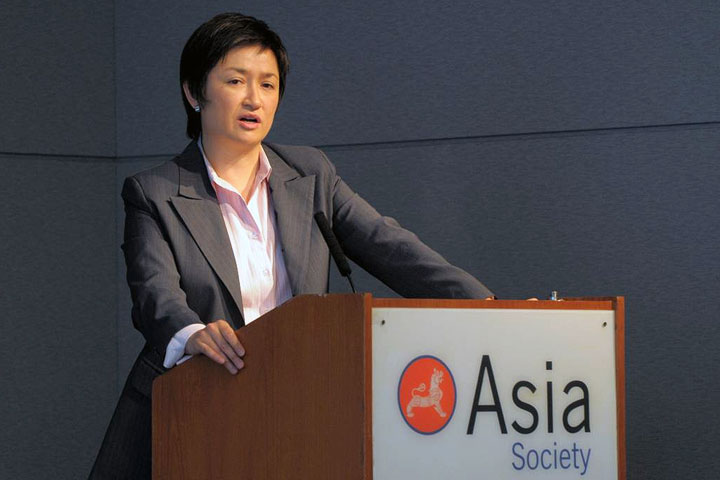
Australia's Minister of Climate Change and Water Penny Wong at Asia Society on Sept. 23, 2009. (Elsa Ruiz/Asia Society)

Australia's Minister of Climate Change and Water Penny Wong at Asia Society on Sept. 23, 2009. (Elsa Ruiz/Asia Society)

NEW YORK, September 23, 2009 – The global community must do everything it can to reach a deal at the United Nations Conference on Climate Change in Copenhagen but still has "a long way to go," said Australia's Minister of Climate Change and Water Penny Wong.

“This December, we have our greatest opportunity to act. The reality is that small steps will not be enough,” Wong said.

Speaking at the Asia Society headquarters in New York, she added that each nation must expedite its efforts if an agreement is to be reached: “We need to be going flat out, at full throttle all the way until Copenhagen.”

Wong is among a host of diplomats from nearly 200 countries who will gather December 7 in Denmark to negotiate a new global pact to tackle climate change. The UN conference is the result of a 2007 agreement made in Bali, Indonesia to construct a successor to the 1997 Kyoto Protocol.

“We’ve seen a small step forward,” Wong said refering to Tuesday's opening of the UN’s climate change summit. “Yesterday, we saw signs that we might just be up for this task... Unfortunately, we don’t have much time.”

UN Secretary General Ban Ki-moon convened the one-day summit in an effort to secure commitments from each nation in the run-up to Copenhagen.

Wong emphasized the severity of the issue. “This risk all of us face knows no precedent,” said Wong. “For the majority of us, nothing in our lifetime will surpass this challenge.”

The minister stressed that in order to limit the global rise of temperature by two degrees Celsius - a limit set by the Group of Eight wealthiest nations in July - we need to begin to reverse the world output of global emissions in the next six years. “That’s not very far away,” warned Wong.

Wong underscored the importance that all nations—both developed and developing—commit to reductions in greenhouse gas emissions: “While no nation can solve this problem on its own, equally there can be no global solution without individual nations stepping to the plate.”

Senator Wong said that the key to reducing emissions in developing countries is to acknowledge their right to develop. “Therefore,” said Wong, “the question is, how do you delink growth and emissions growth?” Wong added: “What you want to encourage are those actions that are going to go right to the delinking issue.”

Pressure has been building for wealthier states to provide financial aid to developing nations for the development and implementation of clean energy technology. Securing aid, said Wong, is "a central element of bringing developed and developing countries together in an international agreement." Wong cautioned that "without a robust package on financing, we will not get the deal we need."

Wong applauded statements by US President Barack Obama and Chinese President Hu Jintao at the UN summit. The Australian minister said joint action by the United States and China is “critical,” and no agreement will be reached without the two world powers.

Reported by Jamal Afridi, Asia Society Online


Article Source

Malaysia for first time includes a DAP and 2 PKR reps in delegation to General Assembly

Thursday, September 24th, 2009 09:10:00
UN
FOR the first time, three MPs from the Opposition will represent Malaysia as official delegates to the UN General Assembly.

They are Wee Choo Keong and Zulkifli Nordin from Parti Keadilan Rakyat, and Chong Chieng Jen from DAP. Wee is Wangsa Maju MP, Zulkifli the Kulim-Bandar Baharu MP and Chong is Bandar Kuching MP.

They will be in New York for two weeks from next week for the 64th session of the General Assembly, which started on Sept 15. Debates will go on till end of this month.

Prime Minister Datuk Seri Najib Razak won’t be attending the assembly. The Malaysian delegation will be led by Foreign Affairs Minister Datuk Anifah Aman.

Wee, Zulkifli and Chong have been briefed on the do’s and don’ts when they are at the assembly. It is not known if they have had the blessings of their respective parties or if they need it in the first place to go to the UN.

Wee is the lone Malaysian Democratic Party member who stood on a PKR ticket in last year's general election.

Malay Mail was informed that the three Opposition MPs were handpicked by Tan Sri Razali Ismail, the 1996-97 UN General Assembly president.

Details on how the three were chosen are unknown, but concern was raised as to whether including Opposition MPs would have a positive impact on Malaysia.

The General Assembly opened on Sept 10 and our local representatives will not be the only new faces from a country’s Opposition party.

One new face will be Japan’s new centre-left leader, Prime Minister Yukio Hatoyama, who has flown to New York for the assembly after being in office for less than a week. Hatoyama also plans to attend the Group of 20 summit in Pittsburgh.

He made his global debut on Monday, with a message of reconciliation with China, asking President Hu Jintao to work together for an EU-style East Asian community.

Hatoyama, who advocates the easing of Japan’s prickly ties with its giant neighbour, told Hu that he intends to push a vision of an East Asian community to unify the region, possibly under a single currency.

Assembly, the UN policymaking body

ESTABLISHED under a charter in 1945, the United Nations General Assembly is a forum for multilateral negotiations.

The General Assembly occupies a central position as the chief deliberative, policymaking and representative organ of the United Nations. Comprising all 192 members of the UN, it also plays a significant role in the process of standard-setting and the codification of international law.

The assembly meets in regular sessions from September to December each year, and thereafter as required.

The General Assembly rules of procedure state that a member's delegation shall consist of not more than five representatives, five alternate representatives and as many advisers, technical advisers, experts and persons of similar status as may be required by the delegation.

An alternate representative may act as a representative, upon designation by the chairman of the delegation.

Article Source

By ANDREW C. REVKIN

environmental kidsAndrew C. RevkinThese New York City high school students will greet and address world leaders gathered at the United Nations on Tuesday for a summit on climate.

A week ago, I met 13 bright, passionate teenagers from around New York City who, like so many New Yorkers, happen to have roots leading directly back to the far corners of the planet. In their case, the roots go to Bangladesh, Haiti, Mexico, Mongolia, Paraguay, Sudan … you get the idea. It is those roots that brought them to the attention of Unicef, which recruited them to speak to the 100 or so world leaders gathering Tuesday at the United Nations for a summit meeting that seeks movement toward a climate accord in December.

When I met them, they were hunkered in a basement room at Unicef headquarters, below an exhibition hall where endless-loop videos were showing the consequences of climate-related hazards. They spoke of the origins of their concerns about the environment. They were clearly part of what I have taken to calling “ Generation E.” Brianda Guzman, a student at the Bronx Theater High School who lives in the Hunts Point section of the Bronx, was nearly in tears talking about a brother whose asthma is inflamed by the truck pollution in the heavily trafficked area. Ms. Guzman and the others were trying to figure out what to say to presidents and prime ministers. We will see the results today.

I had to reflect, though, on whether this delegation could have more of an impact than past youth participants — some invited, some invaders — who have tried to jog the consciences of leaders making decisions, or choosing not to make decisions, that could powerfully shape the world that young people will inherit in a couple of decades. So I got in touch with Severn Culliss Suzuki, who gained brief fame at age 12 when she addressed delegates gathered in Rio de Janeiro for the Earth Summit that resulted in the first climate treaty, the Framework Convention on Climate Change.

Watch the speech from 1992 below, then read Ms. Suzuki’s reflections on the value and limits of having youth weigh in on such deliberations.

The effort under way at the United Nations is intended to breathe life into that pact with a fresh addendum to succeed the Kyoto Protocol, with all of its limitations and flaws. Here are some thoughts from Ms. Suzuki, who, with the passage of 17 years, has moved from childhood to motherhood. She recently completed a master’s degree in ethno-ecology and lives on Haida Gwaii(the Queen Charlotte Islands) in British Columbia with her husband and their 2-month-old baby.

Q. Your speech was powerful and seemed powerfully received. What was your feeling right afterward and for the next few days or months?

A.
After giving the speech I remember having this intense sense of completion. I knew we’d been able to achieve our dream and mission of speaking to the world leaders at the U.N. At that time there was no formal means for children to have a voice at the summit, so we’d slipped in between the cracks, worked hard and used any contacts we had to get five minutes at the plenary. I knew we’d shocked the plenary audience with what we had to say. After two weeks of being on the conference grounds, meeting street children, learning from people from all over the world about environmental issues, me and my friends felt angry, and justified in our anger at our world leaders. I remember feeling very calm, very confident. I hadn’t pulled any punches. I knew that we had achieved what we’d set out to do, and had played our part in the huge effort of our community of friends, family and activists to execute our plan.

Q. The framework convention on climate change was finalized there. Did that feel exciting, triumphant? As you’ve grown up and watched the world stick pretty much with business as usual, what’s been your feeling?

A. I remember at RioCentro there was definitely a buzz, and the sense that important things were happening. But I had the righteous sense that the adults were making all kinds of back door deals, and were making it far more complicated to justify inaction. That was the first summit that I’d attended. In the years after I attended several more international summits, and this sense has only increased. Of course, I’ve grown up since then, and I know that making change in the world isn’t as simple as just speaking to the world leaders. I don’t hold my breath waiting for them to save the world.

Q. Given that trajectory since 1992, do you have a sense whether prospects are better for these kids? [I sent her the photograph above.]

A.
I feel very proud of the fact that now there is a formal means for youth to have a voice; I like to think that ECO made a contribution towards that by speaking at the Earth Summit in ‘92. Youth are now recognized as having a stake in the decisions. However, sometimes I worry that by incorporating them into the system, the youth voice might be lost in the complexities of the U.N. And they are treated as just another stakeholder — given only a few minutes to speak at the end of a conference — yet youth make up half of the world’s population! They are the ones with everything at stake. But then seeing the youth demonstrations at the COP gatherings, and hearing their powerful speeches, I am proud that they are there, to speak truth to power.

Q. Do you have any specific advice for them? Is there any strategy you think they might try that could make the generational message stick?

A. The shocking thing about the speech I gave at Rio is that the exact same speech could be given today. I think that the power of youth remains to cut through the complexities of the negotiations and remind the decision makers of really what it’s all about — the whole reason why the world must get together. Remind these politicians of their own children! Even today, though many would say that we have gone backwards since the Rio Earth Summit, I still have to believe that it is the love people have for their children that will steer the world in the right direction.

Q. And, generally, besides being a mother (congratulations!), what’s your focus these days?

A. Now that I’ve had a baby, my perspective has shifted from being on the side of the youth, demanding change for my future, to being a mother, thinking about the future for my son. Having a baby in the 21st century is heavy with meaning and responsibility. There is a lot to consider. Since I’ve moved to Haida Gwaii, one of the things I’ve been focusing on is language revitalization, learning the Haida Language, the language of my husband and son, which is in danger of extinction.


Article Source